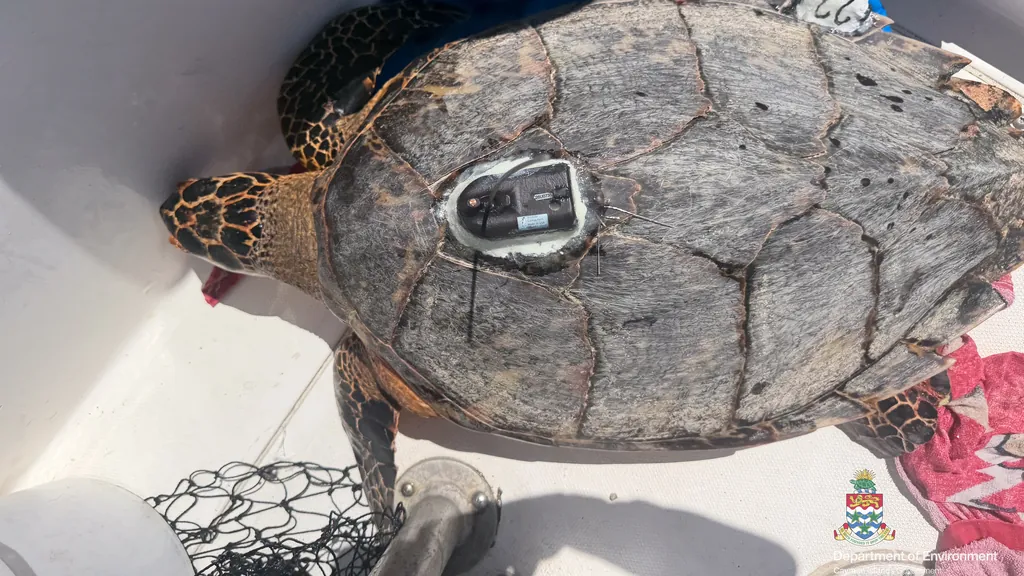
 airG Shady, a juvenile hawksbill turtle, fitted with her satellite transmitter. Photo courtesy of the Cayman Islands Department of Environment.
Meet airG Shady: Cayman's First Satellite-Tagged Juvenile Hawksbill Takes to the Reef
- airG's sponsored juvenile turtle, airG Shady, has been satellite-tagged and is now live on the Sea Turtle Tracker KY map.
- Shady is the first hawksbill turtle ever fitted with a satellite tag in the Cayman Islands since the sea turtle project began.
When airG joined the Cayman Islands Department of Environment (DoE) as a lead conservation partner of the Sea Turtle Tracker KY project earlier this year, one of the three sponsored transmitters was reserved for a juvenile turtle known only by name: airG Shady. That turtle is now in the water, and she's making history.
Shady is a sub-adult hawksbill turtle, and she is the first of her species to be satellite-tagged in the Cayman Islands since the project began, as well as the second juvenile the DoE has tagged this year. Her transmitter is now live on the public tracking map, so anyone can follow her movements in near real time.
Following a young hawksbill
For now, Shady is in the foraging stage of her life, and she has chosen Cayman's coral reefs as her feeding grounds, hunting the sea sponges, jellyfish and urchins that hawksbills favour. Over the next few years she will reach maturity, and that is when her data could become most valuable: her movements may help researchers understand where she came from and which breeding population she belongs to. Every reading she sends back adds to a clearer picture of how young hawksbills use Cayman's reefs, and where her journey takes her next.
A milestone for Cayman conservation
Sea Turtle Tracker KY is powered by a coalition of local businesses and community partners, with acoustic tracking supported by the Darwin Initiative. airG joins sponsors including Caribbean Utilities Company, Maples Group and Caybrew in backing the DoE's sea turtle research, which underpins conservation measures like turtle-friendly lighting near Cayman's nesting beaches.
Her name carries a quiet hope, too. When Shady reaches maturity and returns to nest, we hope she chooses the shade. On a warming planet, that choice matters more than it might sound: sea turtle eggs incubate at the mercy of the sand around them, and cooler, shaded nests improve hatching success and help keep a healthy balance of male and female hatchlings, since hotter sand skews clutches heavily female. Shaded, vegetated nesting habitat gives the next generation a better start.
Shady also shares her name with a future airG product launching soon: airG SHADY, short for Science, Humanities, Art and Design for Young Learners. It is a fitting pairing: the same curiosity that drives airG to build products people love is what makes following a young hawksbill across Cayman's reefs so compelling. You set something in motion, then watch where it goes.
Meet the leads behind the project
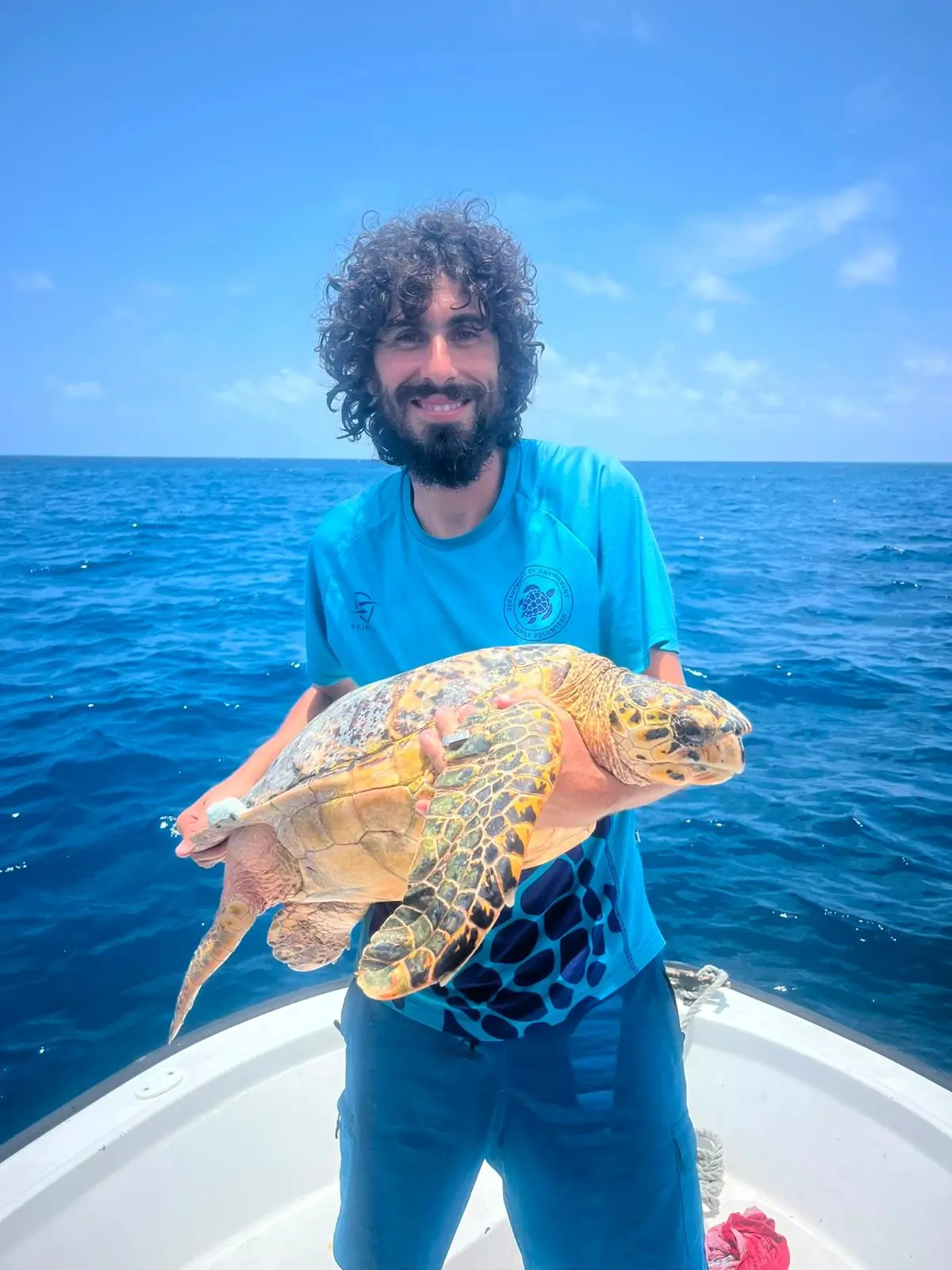
Alejandro Prat Varela · Project Lead. Alejandro is a marine scientist from Spain specializing in oceanography and marine ecology, and he leads the Sea Turtle Tracker KY project. He has worked with sea turtles alongside the Cayman Islands DoE since 2013, and has studied marine life across polar, temperate and tropical waters since 2007. His focus now is uncovering how Cayman's turtles move and use their habitat, to support their long-term conservation.
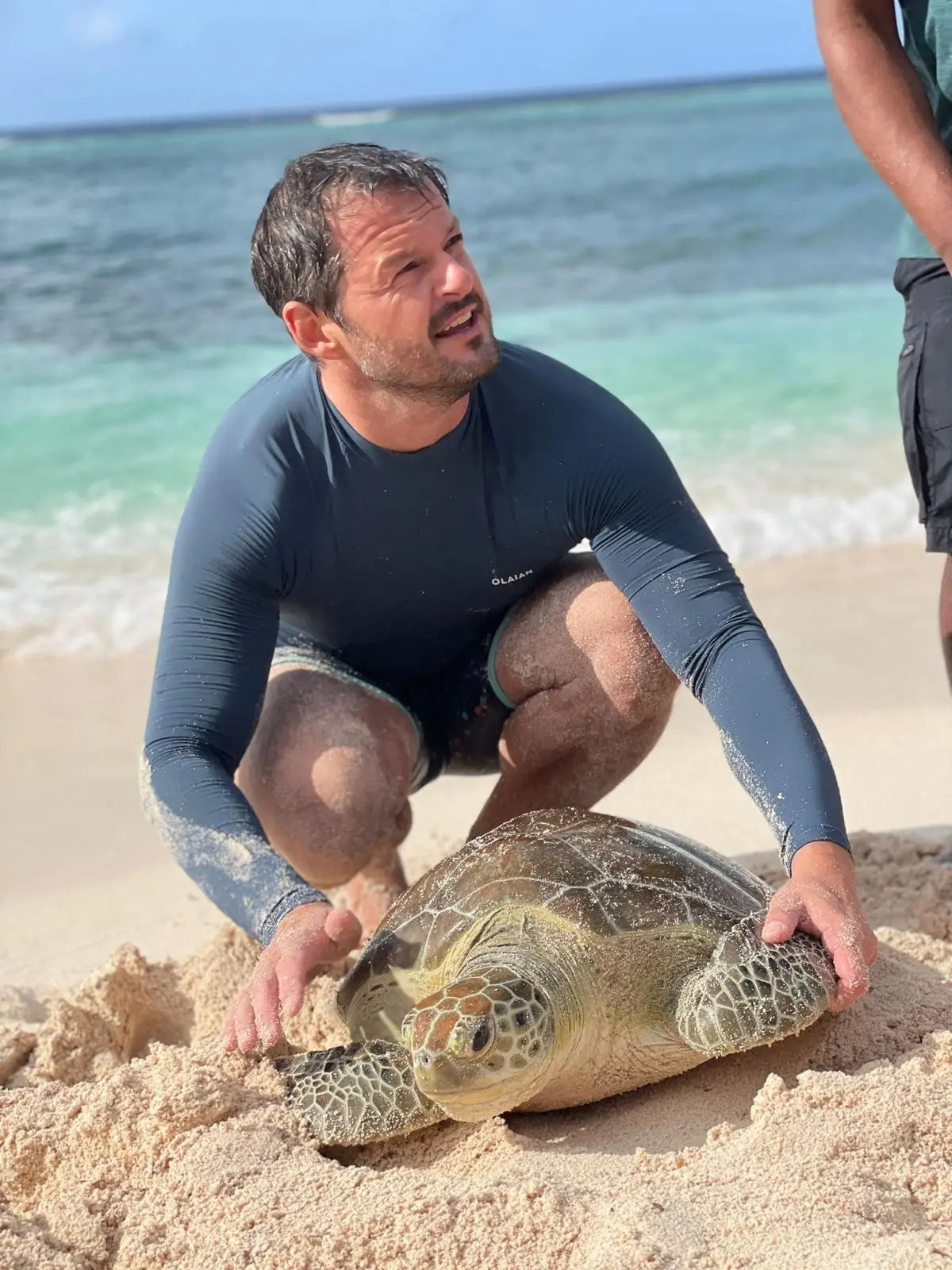
Joseph Roche Chaloner · Field Lead. Joe has been with the Cayman Islands DoE for more than 10 years and serves as Field Lead on the Darwin-funded sea turtle telemetry project, deploying the satellite and acoustic tags at the heart of the research. He holds a BSc in Wildlife Conservation from Liverpool John Moores University and an MSc in Managing the Marine Environment from Heriot-Watt University, and got his start volunteering on a turtle project in Costa Rica at 19. Off the clock, he is happiest in the water, surfing, freediving or diving Cayman's reefs.
Follow Shady's journey
Track airG Shady on Sea Turtle Tracker KYPhotography courtesy of the Cayman Islands Department of Environment. Learn more about the project at doe.ky/turtletracker.